
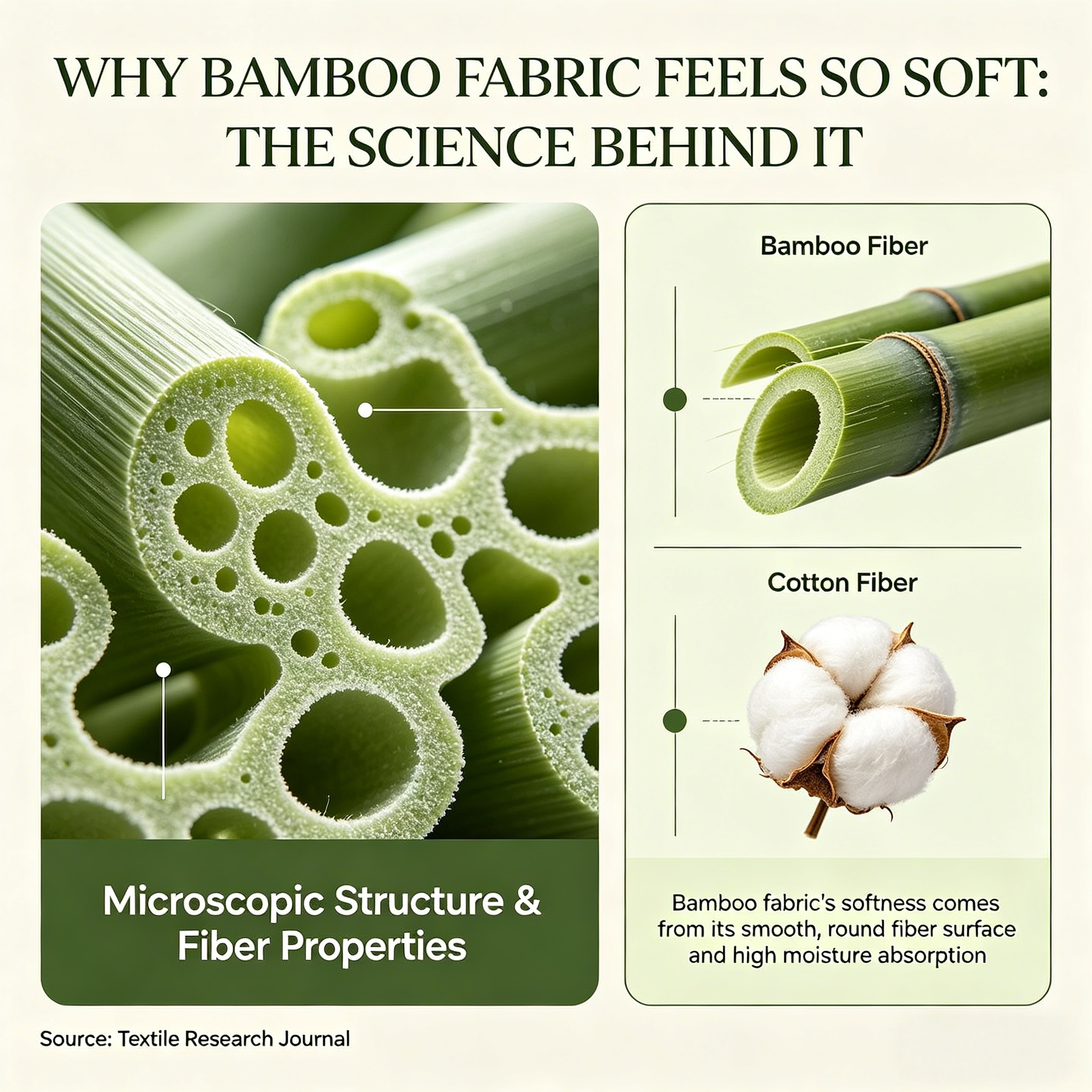
Slide your hand across a T‑shirt made from bamboo fabric, and you might notice an immediate, almost whisper‑like softness—cool to the touch, draping with a silk‑like ease. That sensation isn’t magic; it’s the result of chemistry, physics, and a few well‑chosen manufacturing steps working together. Behind the gentle hand of bamboo textiles lie tiny fibers, molecular arrangements, and finishing techniques that shape how the cloth contacts your skin.
In this article, we’ll follow that tactile trail from the molecular level—cellulose chains and fiber microstructure—to the factory floor, where bamboo can be transformed into viscose, lyocell, or mechanically processed yarns. We’ll also consider how fiber fineness, surface smoothness, moisture behavior, and fabric construction combine to produce the softness you feel, and why similar‑looking products can behave very differently depending on how they were made.
Rather than promise simple answers, we’ll unpack the science that explains a complex, sensory experience—so you can understand not just that bamboo fabric feels soft, but precisely why.
Table of Contents
- Microscopic Secrets: How Bamboo Cellulose and Fiber Fineness Produce Unmatched Softness and How to Choose Quality Fabrics
- Processing Matters: Comparing Mechanical Versus Chemical Methods and Practical Tips to Find Ethically Manufactured Bamboo
- Weave, Finish, and Feel: Why Knits, Brushing, and Enzyme Treatments Alter Hand and How to Care for Bamboo Garments
- Beyond Softness: Moisture Management, Antibacterial Claims, and Practical Buying Advice for Long Lasting Bamboo Pieces
- Q&A
- To Conclude
Microscopic Secrets: How Bamboo Cellulose and Fiber Fineness Produce Unmatched Softness and How to Choose Quality Fabrics
At the microscopic level, bamboo’s secret is not magic but structure: long chains of cellulose arranged into ultra-fine fibrils with a remarkably smooth surface. Those tiny fibrils create a silk-like hand because they reduce the rough edges that irritate skin; meanwhile, abundant hydrogen bonding between chains gives the fiber a flexible, springy feel rather than a stiff one. The combination of fiber fineness and a naturally smooth surface also increases capillary action, so moisture spreads out and evaporates quickly—this makes the fabric feel cool and dry against the skin, enhancing perceived softness even further.
When choosing quality bamboo-derived fabrics, look beyond marketing and focus on fiber type, processing, and certifications. Here are quick checks and red flags to keep in mind:
- Label language: “Bamboo Lyocell/Modal” often indicates closed-loop processing; “Bamboo Viscose/Rayon” is very soft but chemically processed.
- Hand test: If the cloth feels dense and velvety without a plasticky sheen, it’s likely finer and more comfortable.
- Certifications: OEKO‑TEX, FSC, or statements about closed‑loop production signal lower chemical impact.
- Construction: A softer fiber with a loose, breathable weave often outperforms a high thread-count, densely woven fabric for comfort.
| Fiber type | Softness | Quick note |
|---|---|---|
| Lyocell (bamboo) | High | Closed-loop, eco-friendlier |
| Viscose/Rayon (bamboo) | Very high | Extremely smooth, chemical process |
| Mechanical (bamboo linen) | Medium | Coarser texture, more natural process |
Processing Matters: Comparing Mechanical Versus Chemical Methods and Practical Tips to Find Ethically Manufactured Bamboo

When fibers are separated and reshaped, the route they take determines not just the environmental footprint but also the tactile outcome. Mechanical processing—think crushing, natural retting, and combing—keeps the bamboo’s cellulose largely intact, yielding a slubby, textured fabric akin to linen that breathes well and ages gracefully. By contrast, most ultra-soft bamboo textiles on the market are the result of a chemical regeneration: cellulose is dissolved and extruded into smooth, round filaments. This is why commercially labeled “bamboo” sheets and tees feel so silk-like—the regenerated fibers produce a uniformly slippery surface that our skin perceives as softness. Note that different chemicals and recovery systems change the story: some processes are energy- and solvent-intensive, while others reclaim and recycle nearly everything.
To choose fabrics that align with both comfort and conscience, look beyond buzzwords and ask for specifics. Seek materials labelled Lyocell (closed-loop) or branded alternatives (e.g., TENCEL) for lower solvent impact, or explicitly inquire about mechanical methods if you prefer natural texture. Practical cues include:
- Certifications such as OEKO‑TEX, GOTS, or FSC for responsible sourcing
- Brands that disclose solvent recovery rates or use “closed‑loop” terminology
- Clear labeling—“bamboo linen” vs “bamboo rayon/viscose” tells you a lot
Below is a simple snapshot to help compare common routes at a glance:
| Process | Typical Feel | Environmental Note |
|---|---|---|
| Mechanical (Bamboo Linen) | Textured, breathable | Low chemical use, labor‑intensive |
| Viscose (Bamboo Rayon) | Very soft, silky | Higher solvent use; check for recovery |
| Lyocell (Closed‑loop) | Soft with good drape | Solvent largely recycled; better footprint |
Weave, Finish, and Feel: Why Knits, Brushing, and Enzyme Treatments Alter Hand and How to Care for Bamboo Garments
Structure and surface decide how bamboo fabric greets your skin. A loose jersey knit breathes and drapes, while an interlock or rib knit adds body and subtle texture; both change how light hits the yarn and how the fabric slides under your hand. Finishing processes amplify those effects: gentle brushing teases out microfibers for a cloud-like nap and extra warmth, whereas enzyme (bio‑polishing) treatments selectively remove tiny fibrils to reduce fuzz, increase sheen, and produce an ultra-smooth hand. The result is a spectrum of sensations—from silky and sleek to cozy and plush—created by microscopic changes to the fiber surface rather than large chemical overhauls.
To keep those carefully crafted finishes performing, treat bamboo garments with a little consideration.
- Wash cool: Use cold or lukewarm water to preserve enzyme-softened surfaces and prevent shrinkage.
- Use gentle detergent: Mild, pH‑neutral soaps clean without stripping finishes.
- Avoid bleach and heavy fabric softeners: They can break down fibers or coat them, dulling absorbency and breathability.
- Dry with care: Line‑dry or tumble on low; reshape damp garments to maintain drape.
| Finish | Typical Feel | Quick Care Tip |
|---|---|---|
| Knitted (jersey/interlock) | Soft, stretchy, airy | Wash gently, reshape flat |
| Brushed | Plush, warm, slightly fuzzy | Low tumble or line dry |
| Enzyme‑treated | Sleek, smooth, low pill | Cold wash, avoid harsh chemicals |
Beyond Softness: Moisture Management, Antibacterial Claims, and Practical Buying Advice for Long Lasting Bamboo Pieces
Bamboo-derived fabrics manage moisture in ways that often surprise buyers: the long, smooth fibers encourage moisture to move away from the skin, producing a cooling, quick-dry feel that many describe as “breathable.” That said, finish and processing matter more than the word “bamboo” on a label—viscose from bamboo offers superior drape and moisture-wicking compared with coarse bamboo linen. As for antibacterial claims, science is cautious: while some bamboo fibers treated or blended with natural lignin compounds can resist odors, most commercially sold bamboo textiles are not inherently antimicrobial unless specifically treated and tested. Look for third-party certifications or lab results rather than marketing shorthand when antibacterial performance is important to you.
When shopping for pieces you want to keep for years, prioritize tangible attributes over buzzwords. Useful checkpoints include:
- Fabric weight (GSM): 150–220 GSM for durable apparel; higher for home linens.
- Weave and finish: tighter weaves and mercerized or enzyme finishes often last longer.
- Blends: small percentages of cotton or synthetic fibers can increase strength without losing softness.
- Certifications: Oeko‑Tex, GOTS, or FSC for sourcing and chemical standards.
- Care labels: simple wash-and-dry care equals longer life—avoid hard-to-care-for specialty finishes.
For everyday longevity, treat bamboo pieces gently but sensibly: cool-machine washes, mild detergents, and low-heat drying will preserve fiber integrity and softness. The table below gives a quick care-to-result snapshot you can use when deciding on a purchase or routine maintenance:
| Care Action | Likely Result |
|---|---|
| Cool machine wash + gentle detergent | Preserved softness, reduced pilling |
| Low tumble or line dry | Maintains shape, prevents shrinkage |
| Avoid harsh bleach/oxidizers | Longer color life, fiber strength retained |
Bold choices and informed questions at the point of purchase—about GSM, finish, and verified claims—will get you bamboo pieces that stay soft and functionally superior for seasons, not just a single wash.
Q&A
1) What exactly is “bamboo fabric”?
A: “Bamboo fabric” is a general term for textiles made from bamboo plant material. There are two main kinds: mechanically processed bamboo (bamboo linen), made by physically breaking down the plant into fibers, and chemically regenerated bamboo (most common), where bamboo cellulose is dissolved and re-spun into fibers such as bamboo viscose/rayon or lyocell. The end product is a cellulosic textile similar to rayon or Tencel, depending on the process.
2) Why does bamboo fabric feel so soft compared with cotton or other fibers?
A: Softness comes from a combination of factors: the regenerated cellulose fibers produced from bamboo are very fine and have a smooth, round cross-section, so they glide past the skin rather than catching on it. The chemical processing removes rigid plant components (lignin, much hemicellulose), leaving flexible cellulose chains that form a silky, pliable fiber. Fabric construction (knit vs. weave), yarn twist, and finishing treatments also amplify that soft hand.
3) What role does fiber diameter play in perceived softness?
A: Finer fibers bend and compress more easily against the skin, which reduces abrasive contact. Bamboo-derived regenerated fibers are typically finer than many cotton fibers, so fabrics made from them feel smoother and softer. Think of many fine hairs versus a few coarse bristles—the fine ones feel gentler.
4) Is the smoothness due to the bamboo itself or the manufacturing process?
A: Mostly the manufacturing process. Natural bamboo contains rigid components and a coarse structure; the chemical or mechanical processing alters the plant material. Regenerated fibers (viscose/lyocell) are manufactured into smooth, uniform filaments, which create the characteristic silky feel. Mechanical bamboo linen retains more of the plant’s original texture and tends to be coarser unless heavily softened.
5) How does moisture behavior affect softness?
A: Bamboo-derived cellulose is hydrophilic (attracts water), so it absorbs and releases moisture readily. Moisture on the skin can make a fabric feel cooler and softer. Good moisture-wicking and high moisture-regain both contribute to the perception of comfort and softness because the fabric doesn’t cling or feel clammy.
6) Do bamboo fabrics really have natural antibacterial properties that make them feel cleaner and therefore softer?
A: Raw bamboo contains antimicrobial compounds (often called “bamboo kun”), but most chemical processing removes those natural substances. Any lasting antibacterial effect in finished bamboo viscose products is usually the result of additional treatments or finishes, not an inherent property of regenerated bamboo fiber. Claims of permanent natural antibacterial action should be viewed skeptically unless independently tested.
7) How do different production methods (viscose vs. lyocell vs. mechanical) influence feel?
A: Viscose (classic rayon) yields soft, drapey, smooth fabric, but is produced with harsher chemicals unless properly controlled. Lyocell (a closed-loop solvent process) produces equally soft or softer fibers with a cleaner environmental profile and a strong, smooth yarn that often has better wet strength. Mechanical bamboo linen is stronger and coarser—more like flax—unless further softened by finishing. So the softest, most silk-like feels usually come from regenerated routes (viscose/lyocell).
8) Can finishing processes change how soft bamboo fabric feels?
A: Absolutely. Enzyme washes, silicone softeners, brushing (for fleeces), and compacting/relaxing processes all influence hand feel. The same yarn can be made plush and soft or slightly crisp, depending on how the fabric is finished.
9) How does bamboo fabric compare to cotton, silk, and modal in softness?
A: Compared to cotton, bamboo viscose often feels softer, smoother, and more drapey, with better moisture handling. Compared to silk: bamboo can be silky in hand and drape, but typically lacks silk’s natural sheen and luxury fiber strength. Compared to modal: modal (another regenerated cellulose) and high-quality bamboo lyocell are close cousins—both are very soft; differences come down to fiber cross-section, processing, and finishing.
10) Are bamboo fabrics durable, given their softness?
A: Many regenerated bamboo fibers are reasonably durable when blended, knit, or properly finished, but they can be weaker when wet (as is typical for rayon) and may pill or wear if low-quality or over-handled. Lyocell-based bamboo tends to hold up better. Care (gentle washing, avoiding high heat) extends life.
11) What environmental considerations are there around “bamboo fabric softness”?
A: Bamboo, the plant grows fast, needs little pesticide, and regenerates quickly, which is positive. However, the common viscose process uses chemicals (e.g., carbon disulfide) that can be harmful if not managed properly. Lyocell and closed-loop processes recycle solvents and have smaller environmental footprints. Look for independent certifications (e.g., OEKO‑TEX, GOTS, where applicable, or ISO/REACH-compliant mills and closed-loop claims) to gauge environmental and chemical management.
12) Does the “softness” fade with washing or wear?
A: The basic softness from fiber structure remains, but surface finishes and softeners can be washed away over time, and repeated abrasion can change hand feel (pilling, matting). Gentle laundering, avoiding high-heat drying, and following care instructions help preserve softness.
13) Are there myths about bamboo fabric that readers should know?
A: Two common myths: (1) “Bamboo fabric is naturally antibacterial”—usually false for regenerated bamboo fibers. (2) “All bamboo fabric is eco-friendly”—not necessarily; the sustainability depends heavily on the processing method and chemical controls, not just the raw plant.
14) How can a consumer choose genuinely soft, responsibly made bamboo fabric?
A: Check fiber type (lyocell/closed-loop or viscose), ask about mill certifications, look for OEKO‑TEX and other credible labels, read product composition (100% bamboo viscose may be ultra-soft but verify manufacturing claims), and prefer established brands that disclose processing and sourcing practices.
15) Bottom line: Why does bamboo fabric feel so soft?
A: In short, the combination of fine, smooth regenerated cellulose fibers, hydrophilic moisture behavior, and deliberate fabric construction and finishing creates a soft, silky hand. The bamboo plant is the raw material, but it’s the way we transform its cellulose into fibers and treat the fabric that ultimately produces the soft sensation.
To Conclude
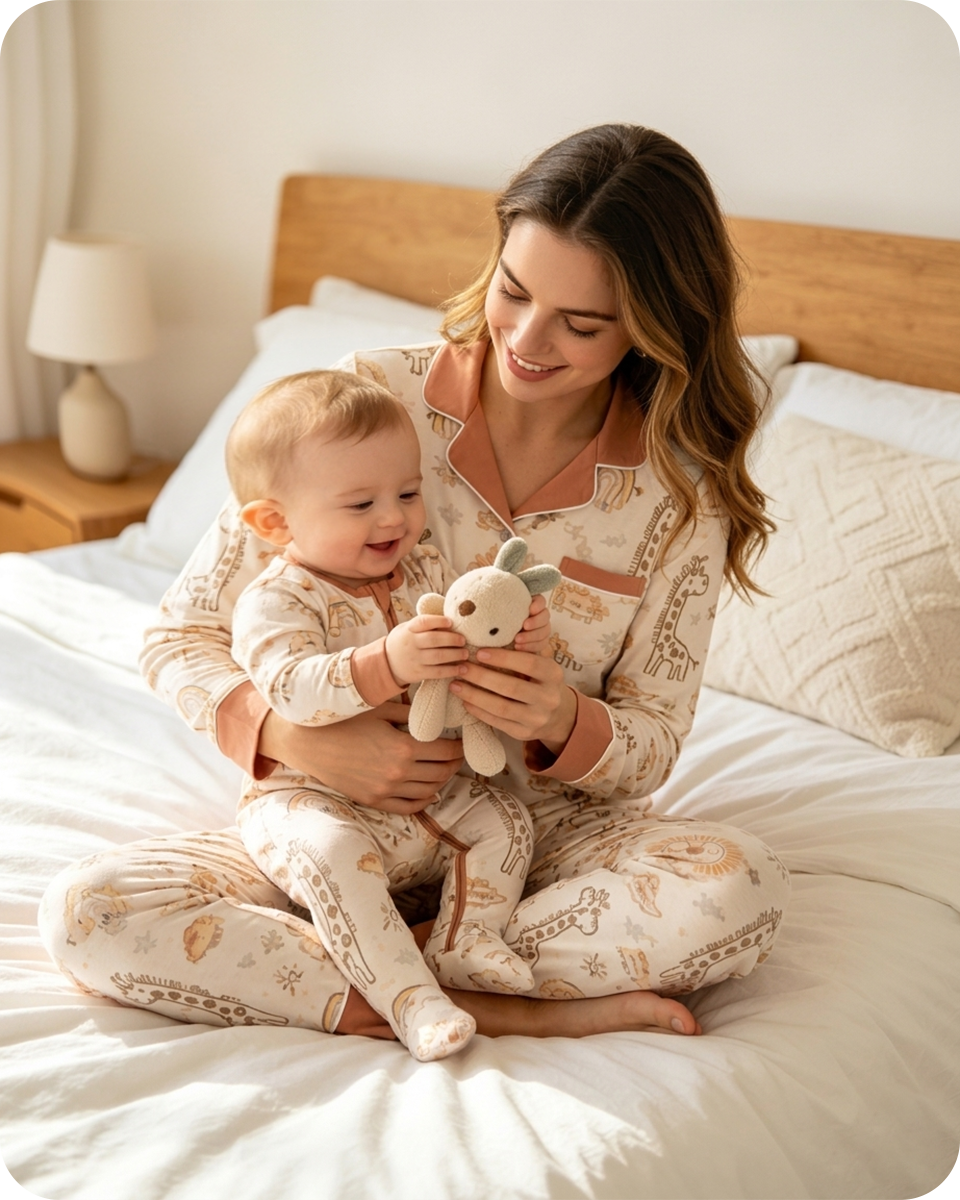
Softness, as it turns out, is not the magic of a single ingredient but a quiet collaboration. The bamboo plant provides long, cellulose-rich fibers with a naturally smooth microstructure, while thoughtful processing—whether mechanical combing or chemical regeneration—refines those elements into the fine strands that glide gently against the skin. Add fabric structure, finishes, and moisture-handling performance, and you get the tactile experience we recognize as “bamboo soft.” This careful balance between nature and textile craftsmanship is exactly what brands like Cloudsboo focus on when creating family sleepwear designed for everyday comfort.
That means the answer is both botanical and technical. The same qualities that make bamboo-derived textiles feel luxurious—fiber geometry, low friction, and hygroscopic comfort—are shaped as much by manufacturing choices as by the plant itself. Claims about inherent antimicrobial magic or environmental superiority deserve the same thoughtful scrutiny, since they depend heavily on how the fiber is produced and finished.
So the next time you reach for a bamboo tee or wrap yourself in bamboo pajamas, you’re experiencing the result of plant biology, materials science, and textile craft working together. Understanding that interplay helps explain not only why bamboo feels so gentle, but also why softness can vary from label to label—and encourages more informed, confident choices about the fabrics we bring into our homes and our children’s routines.