
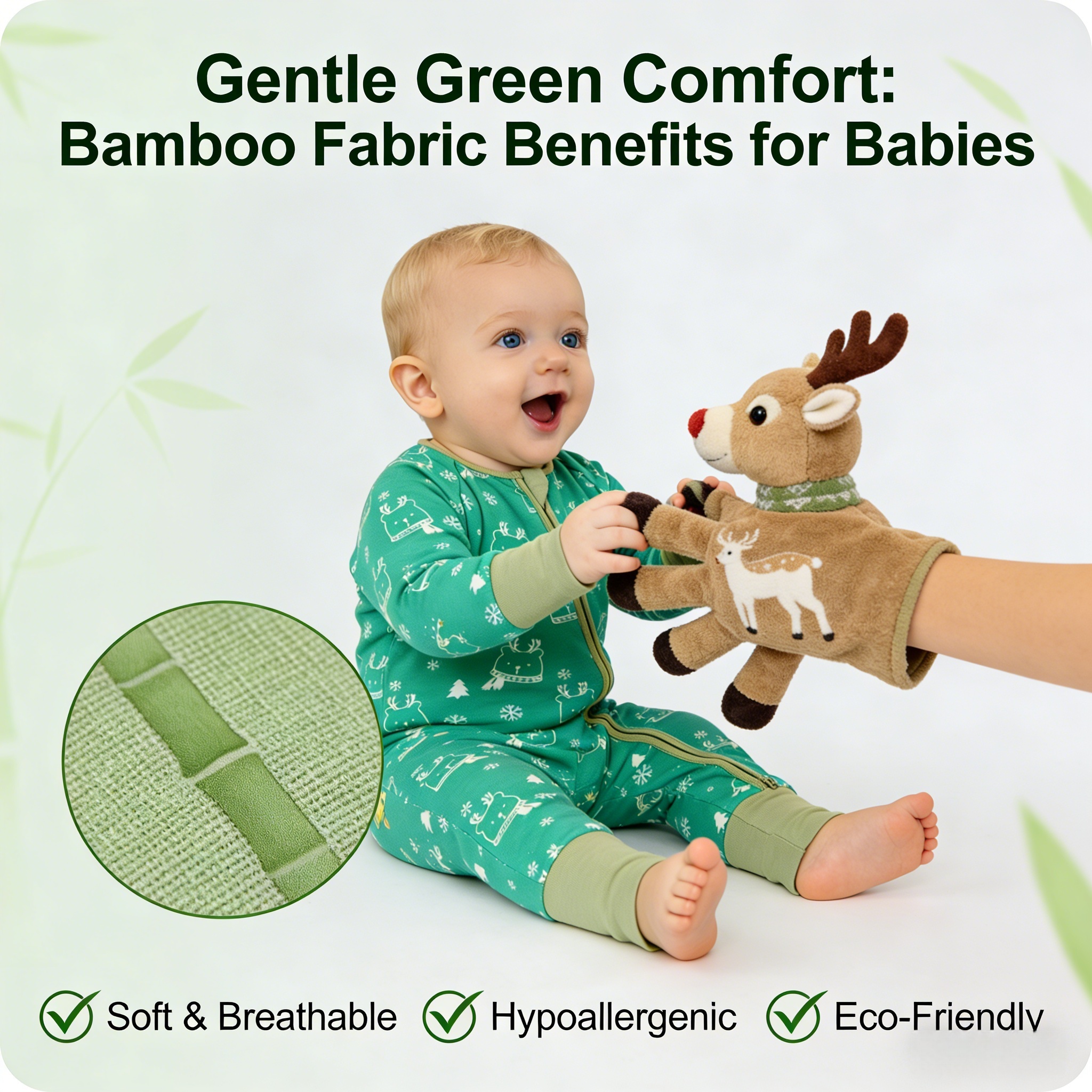
A hush of green, a whisper of softness — bamboo fabric has moved from eco-fashion runways into nurseries, promising a blend of comfort and sustainability that appeals to modern parents. In fabrics spun from one of the planet’s fastest-growing plants, many find a tactile reassurance: cloth that feels gentle against delicate skin while carrying a quieter environmental story than conventional textiles.
For caregivers weighing choices for swaddles, onesies, and bedding, bamboo-based textiles often stand out for their natural breathability, moisture-wicking qualities, and notably silky hand. At the same time, questions arise about durability, processing methods, and real-world safety for infants. Exploring bamboo fabric’s properties with clear, evidence-minded language helps separate marketing from material facts and gives parents a practical context for everyday decisions.
This article walks through what makes bamboo-derived fabrics a popular option for baby items—what they commonly offer, where their advantages come from, and what to watch for when buying and caring for them. You’ll find comparisons with other fibers, notes on certifications and manufacturing, and tips to help balance comfort, health, and environmental concerns when choosing soft essentials for little ones.
Table of Contents
- Gentle by Nature: Breathable Comfort and Moisture Control for Baby Sleep
- Cloudlike Softness with Sensitive Skin in Mind: Hypoallergenic and Antibacterial Benefits Explained
- Smart Choices for Parents: How to Pick, Wash, and Store Bamboo Baby Clothes and Bedding
- Layering for Comfort: Sizing and Temperature Tips for Day and Night
- From Forest to Cradle: Sustainability, Certifications, and What to Look for in Bamboo Brands
- Q&A
- Insights and Conclusions
Gentle by Nature: Breathable Comfort and Moisture Control for Baby Sleep
Light, airy fibers form a tiny climate around your little one, allowing warm air to escape while keeping skin comfortably warm when needed. Bamboo’s open-knit structure naturally promotes airflow, so sheets and sleepwear feel weightless and breathable rather than stifling. Gentle breathability and a soft, silky hand make it easy for babies to settle into uninterrupted sleep without overheating or clinging dampness.
Moisture is managed at a micro level: liquid is drawn away from the skin and dispersed across the fabric, where it evaporates quickly, reducing cling and the risk of irritation. This moisture-wicking action, combined with bamboo’s antimicrobial properties, means bedding and clothing stay fresher longer and help maintain a dry, comfortable sleep surface for sensitive skin.
- Airflow management — reduces trapped heat
- Quick-dry performance — less dampness against skin
- Natural softness — soothing for newborn cheeks
- Low odor build-up — fresher between washes
| Attribute | Bamboo | Cotton |
|---|---|---|
| Breathability | High | Moderate |
| Moisture wicking | Excellent | Good |
| Dry time | Fast | Moderate |
Cloudlike Softness with Sensitive Skin in Mind: Hypoallergenic and Antibacterial Benefits Explained
Feather-light and gentle against newborn cheeks, bamboo fabric feels like a soft hug that won’t irritate delicate skin. It’s fine, round fibers create a smooth surface that reduces friction and the likelihood of redness or chafing, while the fabric’s excellent breathability helps regulate temperature and moisture — two big factors in keeping skin calm. Parents often notice fewer flare-ups when switching to bamboo because the material is hypoallergenic and supports a cleaner microenvironment by helping to minimize bacterial buildup.
Smart care and product choice amplify these benefits:
- Choose unbleached, OEKO‑TEX, or GOTS-certified pieces to avoid harsh chemicals.
- Wash gently: mild detergent, cool water, and low-heat drying preserve softness and antimicrobial properties.
- Layer thoughtfully: bamboo next-to-skin with breathable outer layers keeps moisture from trapping against baby’s body.
| Feature | Bamboo | Conventional Cotton |
|---|---|---|
| Surface feel | Silky, low-friction | Softer with wear |
| Skin sensitivity | Hypoallergenic-friendly | May irritate sensitive skin |
| Moisture control | Excellent wicking | Slower to dry |

Smart Choices for Parents: How to Pick, Wash, and Store Bamboo Baby Clothes and Bedding
When shopping for little ones, favor fabrics that balance softness with durability: choose garments labeled as 95% bamboo viscose, bamboo modal, or bamboo lyocell, and check for trusted certifications like OEKO‑TEX® or GOTS to avoid unwanted chemicals. Pay attention to fabric weight (GSM) — lighter weaves are silky and breathable for swaddles, while medium-weight knits hold their shape better for bodysuits. Small details matter too: look for reinforced seams, gentle elastic, and dyes that promise colorfastness so the first few washes don’t turn a pastel into a puzzle.
- Sort and protect: wash bamboo with similar colors; use mesh bags for tiny items.
- Gentle cycles and cool water: machine wash cold or warm (≤30°C/86°F) to preserve softness and prevent shrinkage.
- Mild detergent only: avoid bleach and fabric softeners—these degrade fibers and reduce absorbency.
- Drying tips: tumble on low or air-dry flat; remove promptly to minimize wrinkles and stretching.
For storage, aim for breathable solutions that protect without trapping moisture: fold bamboo pieces neatly and place them in cotton storage bags or open shelving rather than sealed plastic bins. Rotate items seasonally and give special pieces a quick airing to prevent mustiness; for long-term keepsakes, wrap in acid‑free tissue. A small, simple table below gives quick, practical storage cues you can use when organizing nursery drawers or packing for trips.
| Item | Quick Storage Tip |
|---|---|
| Swaddles | Roll loosely; keep in a breathable drawer. |
| Sleep sacks | Fold flat; store in a cotton bag to avoid dust. |
| Everyday onesies | Stack by size and rotate frequently to keep fabrics fresh. |
Layering for Comfort: Sizing and Temperature Tips for Day and Night
Bamboo’s natural breathability makes it ideal for stacking lightweight pieces without overheating. Aim for a close-fitting base layer in bamboo viscose next to the skin, a slightly looser cotton or bamboo blend mid-layer for warmth, and an easy-to-remove outer layer for sudden drafts. For growing infants, consider choosing one size up when a snug fit would be too restrictive—this gives room for movement and for an extra blanket if the night turns cool.
- Feel the nape of the neck: warm and dry is good; sweaty or clammy means remove a layer.
- Use footed styles for newborns and switch to separates as mobility increases.
- Prefer snaps and zippers for quick nighttime changes—less disturbance for sleep.
- Keep hats for the first weeks, but remove them indoors when the baby is warm.
Below is a simple thermostat-friendly guide to help match room temperature with layers:
| Room Temp | Suggested Layers | Quick Note |
|---|---|---|
| 20–24°C / 68–75°F | Light bamboo onesie + thin sleep sack | Day or night — breathable and cool |
| 16–20°C / 61–68°F | Bamboo base + mid-layer sleeper | Comfortable for naps and overnight |
| <16°C / <61°F | Base + cozy mid-layer + outer sleep sack | Use thicker bamboo blends; check extremities |
Always trust your baby’s signals over the thermometer—if fingers and toes are cool, add a layer; if the chest is warm and moist, pare back. Bamboo’s gentle thermal balance makes those adjustments easy and forgiving.
From Forest to Cradle: Sustainability, Certifications, and What to Look for in Bamboo Brands
Imagine the soft sheets in a newborn’s bassinet tracing their origin back to a living, breathing grove rather than a petrochemical plant. Bamboo can be one of the gentlest choices on that path when cultivation avoids monocultures, water is managed responsibly, and manufacturers use closed-loop processes that capture and reuse solvents. However, not all bamboo fabrics are created equal: fast growth alone doesn’t guarantee low impact—processing methods, dyeing, and transportation shape the final ecological footprint and the safety of the fabric that touches delicate skin.
When choosing a brand, prioritize transparency and third‑party validation. Look for labels that indicate responsible farming, chemical management, and social accountability, and favor companies that publish traceability reports. Practical checks include:
- Supply chain transparency — clear country-of-origin and factory details.
- Closed-loop processing — solvents are captured/reused, especially for viscose/lyocell.
- Third-party certifications — independent verification of ecological and human-health claims.
- Low-impact finishes — fragrance-, formaldehyde-, and heavy-metal-free treatments.
- Responsible packaging & labor — recyclable packaging and fair working conditions.
| Certification | What it guarantees |
|---|---|
| GOTS | Organic farming + strict ecological and social standards for textile processing. |
| OEKO‑TEX Standard 100 | Product tested for harmful substances—safer for baby skin. |
| FSC | Responsible forest management and traceable sourcing of raw material. |
| Lyocell (closed‑loop) | Manufacturing that recovers solvents and reduces chemical discharge. |
Q&A
Q: What is bamboo fabric, and how does it differ from cotton or synthetic fibers?
A: Bamboo fabric usually refers to fibers made from bamboo pulp that are turned into yarn through chemical or mechanical processes. Unlike cotton (a natural staple fiber) or synthetics like polyester, bamboo-derived textiles can range from soft, plant-based viscose/lyocell to mechanically processed bamboo linen. The end feel and performance depend on the processing method rather than the plant alone.
Q: Why is bamboo fabric often recommended for baby clothing and bedding?
A: Bamboo fabrics are prized for their softness, breathability, and moisture-wicking properties—qualities that can make them comfortable next to a baby’s sensitive skin. They also tend to drape well and feel cool to the touch, helping babies regulate temperature more comfortably than some heavier fabrics.
Q: Is bamboo fabric safe for newborn skin and allergies?
A: Many parents find bamboo fabric gentle on sensitive skin because of its soft texture and low irritation potential. However, “hypoallergenic” is not guaranteed: reactions are more often due to finishes, dyes, or residues from processing. Look for products with clear certification (e.g., OEKO-TEX Standard 100) and wash new garments before first use.
Q: Does bamboo fabric have natural antibacterial properties?
A: Bamboo plants contain compounds that can inhibit microbes, but much of that natural chemistry may be altered or lost during industrial processing into fabric. Some lab studies show reduced bacterial growth on certain bamboo-derived textiles, but this isn’t a replacement for good hygiene—regular washing remains the best practice.
Q: How does bamboo fabric help with temperature regulation?
A: Bamboo-based textiles are breathable and wick moisture away from the skin, which helps evaporative cooling in warm conditions. Their structure also provides a light insulating layer in cooler environments, so they’re often described as thermoregulating rather than strictly warm or cool.
Q: Are there environmental benefits to choosing bamboo fabric?
A: Bamboo, as a crop, grows quickly, needs less fertilizer, and can often be cultivated without irrigation, which gives it sustainability advantages. However, environmental impact varies widely depending on processing. Chemically intensive viscose production can be polluting unless it’s performed in a closed-loop system that captures and reuses chemicals. Look for transparency and eco-certifications when sustainability is a priority.
Q: What certifications or labels should parents look for?
A: Useful marks include OEKO-TEX Standard 100 (tests for harmful substances), OEKO-TEX Made in Green or STeP (production and social standards), and independent claims of closed-loop manufacturing. Certifications like GOTS apply to organic fibers and may be relevant if viscose/lyocell processing meets their criteria; FSC can indicate responsibly sourced raw materials. Read labels and brand transparency statements carefully.
Q: How should bamboo baby items be washed and cared for?
A: Wash bamboo fabrics on a gentle cycle with mild detergent, using cold or warm water. Avoid bleach and strong optical brighteners. Tumble dry low or air-dry to reduce shrinkage and preserve softness. Iron on a low setting if needed. Always follow the manufacturer’s care label.
Q: Is bamboo fabric durable enough for everyday baby use?
A: Quality bamboo textiles can be durable when cared for properly, but performance varies with fiber type and fabric construction. Blends with cotton or synthetic fibers may increase strength but can change feel and breathability. Inspect stitching and weave when choosing items intended for frequent use.
Q: Are there any safety concerns specific to baby sleepwear made from bamboo?
A: As with any infant sleepwear, choose garments that meet relevant flammability and safety standards and follow safe sleep guidance (e.g., keeping the crib free of loose blankets and pillows for infants). Check that fabrics haven’t been treated with chemical finishes like certain flame retardants or stain repellents unless they comply with safety standards.
Q: How does the cost compare between bamboo and other baby fabrics?
A: Bamboo textiles often sit in the mid-to-high price range compared with basic cotton because of processing and branding. While initial cost may be higher, many parents feel the softness and longevity justify the expense; comparing care requirements and expected lifespan helps determine value.
Q: Can bamboo fabric be composted or biodegraded at the end of its life?
A: Pure mechanically processed bamboo fabrics (bamboo linen) and some natural-cellulose fibers can biodegrade under the right conditions. Chemically processed viscose/lyocell is cellulose-based and also biodegradable, but finishes, dyes, and blends with synthetics can hinder compostability. Check product composition for end-of-life expectations.
Q: What baby items are best made from bamboo fabric?
A: Popular choices include swaddles, onesies, pajama sets, crib sheets, burp cloths, bibs, and towels—items that benefit from softness and moisture management. For items requiring high abrasion resistance (e.g., play mats), other materials might be more suitable.
Q: How can parents choose the best bamboo product for their baby?
A: Start with clear product information: fiber type (viscose/lyocell vs mechanical), care instructions, and certifications. Prefer brands that explain their processing (e.g., closed-loop or lyocell processes) and show test results or safety labelling. Read reviews on fit and durability, and wash items before first use to remove any residual processing agents.
Q: Any final practical tips for parents considering bamboo fabrics?
A: Think of bamboo textiles as a soft, breathable option that can be gentle on delicate skin—especially when you choose well-made products with transparent sourcing and safety testing. Combine thoughtful selection with proper care, and you’ll have garments and linens that feel like a calm, green hug for your baby.
Insights and Conclusions
As you tuck the last swaddles away and fold another tiny wardrobe, remember that choosing bamboo fabric for baby is as much about feeling as it is about values. Its cloudlike softness, natural breathability, and generally gentle profile on sensitive skin make it an appealing option for newborns and toddlers alike. At the same time, how the fabric is made and certified matters—look for transparent sourcing, third‑party labels, and mindful care instructions to make the choice align with your priorities.
Whether you pick pure bamboo fibers, a blended knit, or a single bamboo item to start, the goal remains the same: comfort and safety for the smallest members of the family. Thoughtful selection and gentle laundering can help you enjoy the best of bamboo’s comforts while staying aware of environmental and manufacturing trade‑offs. In the end, a well‑chosen fabric becomes more than clothing—it becomes part of the quiet, everyday comfort that helps little ones rest, grow, and thrive.