
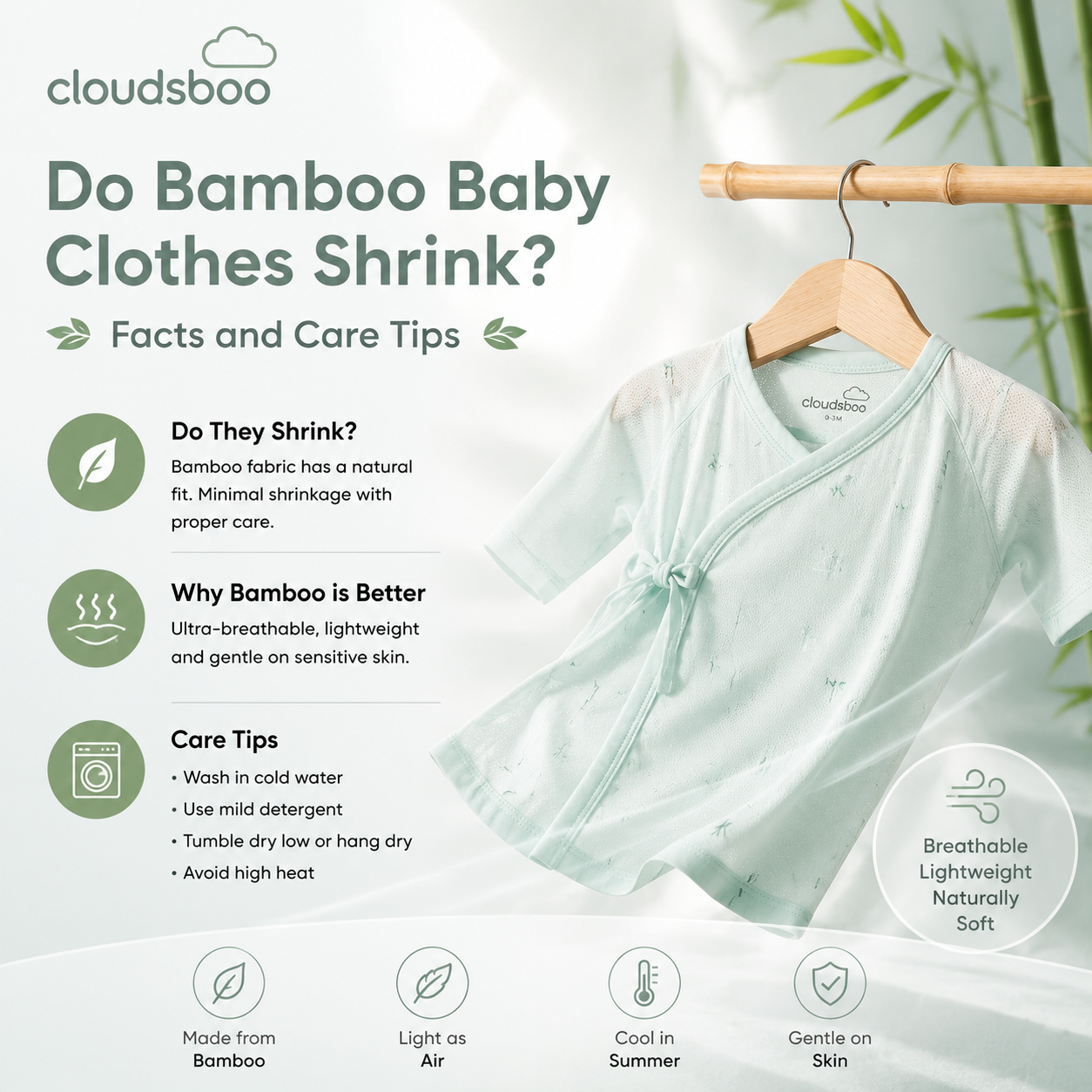
There’s something quietly luxurious about bamboo baby clothes: a whisper-soft onesie, a cozy swaddle that seems to breathe with the baby. Yet beneath that silky comfort, many caregivers wonder the same practical question—will these garments shrink after the first wash? It’s a small concern with big consequences when you’re dressing a growing child.
This article unpacks the facts behind bamboo fabric—what “bamboo” actually means in textiles, how different manufacturing methods affect behavior in the wash, and the realistic risk of shrinkage. We’ll also offer clear, evidence-based care tips to help you preserve fit, softness, and longevity so those beloved pieces keep doing their gentle work.
Whether you’re a new parent navigating a laundry pile or a gift-giver choosing sustainable, comfortable clothing, understanding how bamboo fibers respond to laundering will help you make informed choices and avoid common pitfalls. Read on for a calm, practical look at why bamboo clothes behave the way they do—and how to care for them.
Table of Contents
- Understanding bamboo fabric and why it may shrink in the wash
- How laundering habits and water temperature influence bamboo baby clothes
- Practical washing and drying tips to minimize shrinkage and maintain softness
- Knowing when shrinkage is normal and when to replace or resize garments
- Q&A
- To Wrap It Up
Understanding bamboo fabric and why it may shrink in the wash
Bamboo-derived textiles are not a single fabric but a family: from soft bamboo viscose (rayon) and eco-friendlier lyocell to heavier bamboo-linen blends. The way the fiber is processed — chemical conversion versus mechanical spinning — plus whether the garment is knitted or woven and how it was finished, all influence how it behaves in water. Because many bamboo fabrics are regenerated cellulosic fibers, they can relax and compact when exposed to heat and mechanical action, which is why a snug onesie can feel noticeably smaller after a hot wash or tumble dry.
- Cold wash, gentle cycle: reduces fiber movement and limits relaxation.
- Air dry or low tumble: prevents heat-driven shrinkage and preserves drape.
- Look for “pre-shrunk” labels: They indicate the maker has relaxed fibers during finishing.
- Choose knit for stretch: knits recover better than woven fabrics after washing.
Small adjustments in care make a big difference—think of shrinkage as fiber memory being reset. Below is a quick reference to common causes and simple fixes to keep baby clothes soft and true to size:
| Cause | Quick fix |
|---|---|
| High heat in the wash or dryer | Switch to cold wash and air-dry |
| Excessive agitation | Use a gentle cycle, lower spin speed |
| Unfinished/untreated fabric | Buy pre-washed items or size up |
How laundering habits and water temperature influence bamboo baby clothes
Bamboo fibers are naturally soft and forgiving, but they respond to heat and mechanical stress. Washing in cold water keeps the yarns compact and helps maintain size and drape, while hot water can relax fibers and produce subtle shrinkage or loss of elasticity over repeated cycles. Likewise, aggressive agitation—long cycles, heavy loads, or high-spin speeds—can cause piling and stretch, so choosing a gentle cycle and minimal spin preserves shape and the fabric’s silky hand.
Small changes in laundering habits make big differences. Follow these quick habits to protect your baby’s bamboo garments:
- Wash temperature: opt for cold or lukewarm water.
- Detergent: Use mild, enzyme-free formulas to avoid fiber breakdown.
- Drying: air-dry flat or use tumble dry low to prevent shrinking; avoid high heat.
- Extras: skip fabric softener and use a mesh bag for tiny items.
| Water Temp | Likely Effect |
|---|---|
| Cold (≤30°C / 86°F) | Stable size, soft hand |
| Lukewarm (30–40°C / 86–104°F) | Gentle cleaning, minimal risk |
| Hot (≥60°C / 140°F) | Higher shrinkage, fiber stress |
Practical washing and drying tips to minimize shrinkage and maintain softness
Think of bamboo baby clothes as cuddly investments: a few simple habits at the washer and dryer keep them soft and true-to-size. A gentle approach—lower temperatures, short cycles, and careful handling—reduces the natural tendency for fibers to contract while preserving that buttery feel babies love.
- Wash cold or lukewarm (≤30°C / 86°F) to limit fiber contraction.
- Use a delicate cycle and a mild, fragrance‑free detergent to protect the fabric’s integrity.
- Avoid bleach and fabric softeners; they break down bamboo fibers and reduce absorbency.
- Turn garments inside out and fasten snaps/zippers; use laundry bags for socks and small items.
- Sort by weight and color—wash heavier items separately to prevent over-agitation.
For drying, reshape garments while damp and lay flat or hang to air dry whenever possible; if you must tumble dry, choose a low-heat or air-dry setting and remove items promptly to prevent excess shrinkage. Adding a couple of wool dryer balls can soften clothes naturally and shorten drying time without chemicals.
| Method | Temp/Setting | Effect on Softness |
|---|---|---|
| Cold wash + air dry | ≤30°C / Flat | Very soft, minimal shrinkage |
| Delicate cycle | Low spin | Soft, shape retained |
| Low tumble dry | Low/No heat | Soft but check fit |
Knowing when shrinkage is normal and when to replace or resize garments
Bamboo baby clothes often settle into their true shape after the first wash — a small, predictable change rather than a catastrophe. Expect a gentle trim around hems, slightly snugger cuffs, and a softer drape as fibers relax; this is usually between 2–5% in size for most garments. To tell normal settling apart from problematic shrinkage, look for these telltale, harmless signs:
- Shortened sleeves or legs but intact seams.
- Softer fabric hand and improved stretch recovery.
- Even uniform change rather than wrinkling or puckering only in spots.
If changes go beyond mild settling, it’s time to think about replacing or resizing. Watch for fabric distortion, compromised closures, or sizing loss that affects fit and safety — for example, neck openings that become tight or seams that split. The table below gives a quick, practical guide to when to accept, alter, or retire a piece:
| Observed Change | Typical Action |
|---|---|
| <3% shrink — slight fit shift | Keep; adjust layering or wash cold |
| 3–7% shrink — snugger fit | Consider resizing or repurposing (sleepwear → layers) |
| >7% shrink or uneven distortion | Replace: risk of discomfort or safety concerns |
Q&A
Q: Do bamboo baby clothes shrink?
A: Yes — like most natural fibers, bamboo fabrics can shrink, especially during the first few washes. The amount varies by fiber type and construction, but with proper care shrinkage is usually minor.
Q: How much will they typically shrink?
A: Most bamboo garments experience small shrinkage — often only a few percent (commonly 2–5%) — but exact amounts depend on whether the fabric is bamboo viscose/rayon, modal, lyocell (Tencel), or a bamboo blend, and on how they’re washed and dried.
Q: Does the type of “bamboo” fabric matter?
A: Absolutely. Bamboo viscose/rayon (the most common) is softer but more prone to slight shrinkage. Lyocell/modal versions are usually more dimensionally stable. Bamboo-cotton blends may shrink like cotton, while bamboo-linen is more durable. Always check the garment label for fiber content.
Q: Are bamboo baby clothes pre-shrunk?
A: Many manufacturers pre-shrink garments, but not all. Labels or product descriptions will often say “pre-shrunk” or “pre-washed.” If in doubt, assume a small initial change in size and plan accordingly.
Q: What washing steps prevent shrinkage?
A: Wash in cold or cool water (around 30°C / 86°F or below) on a gentle cycle, use a mild, baby-safe detergent, avoid bleach and harsh enzymes, and turn garments inside out. Gentle handling reduces agitation, which helps preserve size and softness.
Q: Can I tumble dry bamboo baby clothes?
A: Tumble drying on high heat can cause shrinkage and damage fibers. If you use a dryer, choose the lowest heat or delicate setting and remove items while slightly damp. Air drying flat or hanging to dry is safest.
Q: What about ironing and steaming?
A: Iron at low to medium heat if needed, and preferably while the garment is slightly damp. Use a pressing cloth to protect the fabric. Avoid excessive steam or very high temperatures.
Q: My baby’s onesie has shrunk — can I fix it?
A: You can try gently stretching the garment while it’s damp and laying it flat to dry in the desired shape. This sometimes recovers a bit of length or width, but it won’t fully reverse major shrinkage.
Q: How should I store bamboo baby clothes?
A: Store clean, dry garments folded or hung in a cool, dry place away from direct sunlight. Avoid overcrowding to prevent misshaping. Use breathable storage — plastic can trap moisture and encourage mildew.
Q: Any special tips for stains and spots?
A: Treat stains promptly with a mild, baby-safe stain remover or gentle soap. Spot-clean with cool water and avoid hot water or aggressive scrubbing that can distort fibers.
Q: Do blends (bamboo + cotton/spandex) shrink differently?
A: Yes. Cotton-heavy blends behave more like cotton and may shrink more. Small amounts of spandex/elastane improve recovery and reduce visible shrinkage/stretching. Follow the care instructions for the dominant fiber.
Q: Is it better to size up when buying?
A: If you’re worried about shrinkage or want longer wear, choosing the next size up is a practical option. Bamboo’s softness and drape mean slightly larger sizes still look and feel comfortable.
Q: Are bamboo baby clothes safe for sensitive skin after washing?
A: When washed with a gentle, fragrance-free detergent and rinsed well, bamboo fabrics are usually very skin-friendly — breathable and soft — making them a popular choice for sensitive baby skin.
Q: Any quick checklist to minimize shrinkage?
A: Yes — wash cold, gentle cycle; mild detergent; avoid bleach; low or no heat drying (air dry preferred); reshape damp garments; check labels; and pre-wash new items if you want to know their true post-wash size.
Q: Final takeaway?
A: Bamboo baby clothes can shrink a little, especially without careful washing and drying, but they remain a soft, breathable, and comfortable choice. With gentle care — cold wash, mild detergent, and low-heat or air drying — shrinkage is usually minimal and manageable.
To Wrap It Up
Bamboo fiber baby clothing offers a natural balance of softness and flexibility. Like all natural materials, it may experience slight shrinkage when exposed to high heat or harsh washing conditions, though this is generally minimal and manageable.
For Cloudsboo, maintaining fabric quality and fit is straightforward with proper care: use cold or lukewarm water, a mild detergent, and a gentle cycle. Avoid high-temperature drying; instead, opt for air-drying or low-heat tumble drying. Reshaping garments while damp helps preserve their original structure and comfort.
Checking care labels and fabric composition is essential, especially for blended textiles. Pre-washing new pieces can also help ensure sizing accuracy. With consistent gentle care, bamboo garments remain breathable, lightweight, and comfortably fitted for everyday wear.